
Faded Ink on an Old Recipe Card
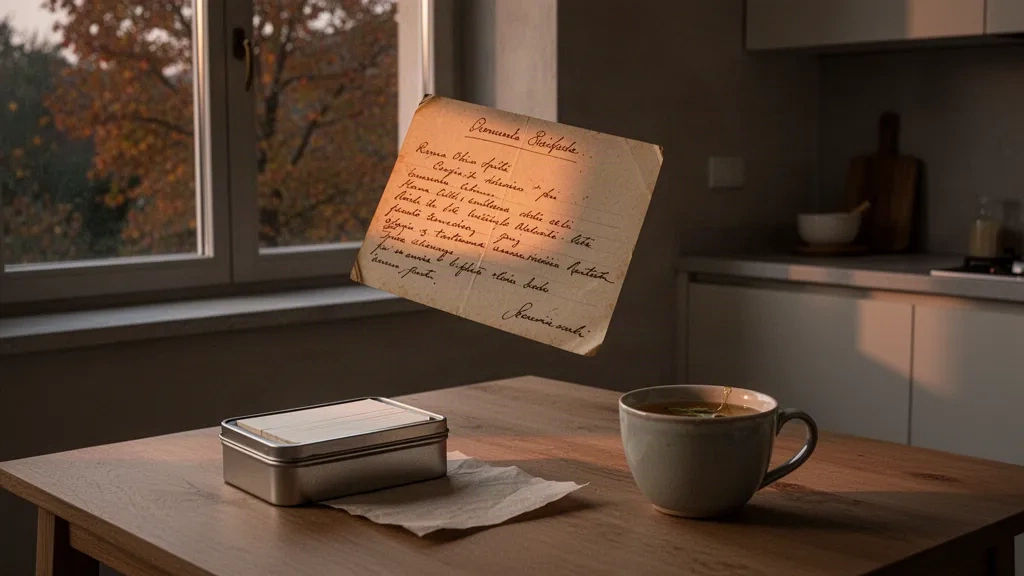
The morning came in cold enough that I wanted a sweater, and by afternoon it had turned into one of those warm, still days September keeps in its pocket for when you’ve stopped expecting them. I was out for most of it, and by evening the kitchen was clean and the last of the light was crawling slowly across the table, going long and orange the way it only does in autumn. I sat down with a cup of herbs — sage and a little honey, nothing more — because the room was finally quiet and I wasn’t ready to leave it.
Then I did something I’ve been meaning to do for weeks: I got out the tin and tried to read the card my aunt wrote out years ago, the one for the almond biscuits my cousin keeps getting wrong. Her handwriting got smaller as the card filled up, and the ink has gone brown and thin, so I ended up holding it up to the window at an angle where the low light catches the indent of the pen. You can read a surprising amount that way — the paper keeps the pressure of the pen even where the ink has given up. I didn’t cook anything from it. I just wanted to know what it said, and I got most of it: the quantities, the oven temperature, and one word near the bottom I’m still not sure about, which might be “warm” and might be “twice.” I’ll ask my cousin what hers says and settle it.
Which is the same problem as remembering what a command does and not its name — you know exactly what you want and have nothing to type. man -k (the same thing as apropos) searches the descriptions of every command on the machine, so you can type a word like “archive” and be handed the list of things that do that, instead of sitting there snapping your fingers at a word that won’t come.
Before I turned off the light I wrote one small thing on a scrap and folded it in with the cards: tomorrow, look up that word. Not a plan, just a reminder parked where I’ll trip over it.