
The Fog That Ate the Far End of the Street
The fog came down overnight and by morning the far end of the street had simply gone. Not dimmed — gone, as though someone had folded the town up and put it away for the day. I went out early with no particular errand, just to be in it, and about halfway along the wall a voice reached me before its owner did. The woman from the house with the green door, somewhere ahead and completely invisible, saying good morning to the grey. I said it back to the grey. Sound does that in fog: it arrives before the person does, which is either charming or unsettling depending on your mood, and this morning I found it charming.
At the market there was a crate of quinces at the end of a table, knobbly and hard as little wooden clubs, the colour of old ivory. I bought two kilos without having planned to buy anything, because quinces wait for nobody — they come and go in three weeks and then they’re gone until next year.
So the afternoon went to cotognata. Peel, core, chop, simmer with a splash of water until they collapse, then push the whole lot through a sieve, which is the part that costs you your wrists and your good opinion of yourself. Then back into the pan with sugar, roughly the same weight as the pulp, and stir. That is genuinely the whole recipe: stir. Forty minutes, maybe more, until it darkens to amber and pulls clean away from the sides. I’d decided earlier in the week to keep one hour a day for exactly one thing and nothing else, so the radio stayed off and I just stood there with a wooden spoon, which turned out to be the nicest hour I’ve had in a while.
While it cooked down I had a long job running on the Mac — nothing dramatic, a big folder being compressed — and I didn’t want the machine dozing off in the middle of it. caffeinate -i <command> keeps it awake for that command and then lets it sleep normally afterwards, so you don’t have to go into the settings and change anything permanent. Small thing. Saves an hour of wondering why the job stopped at eleven per cent.
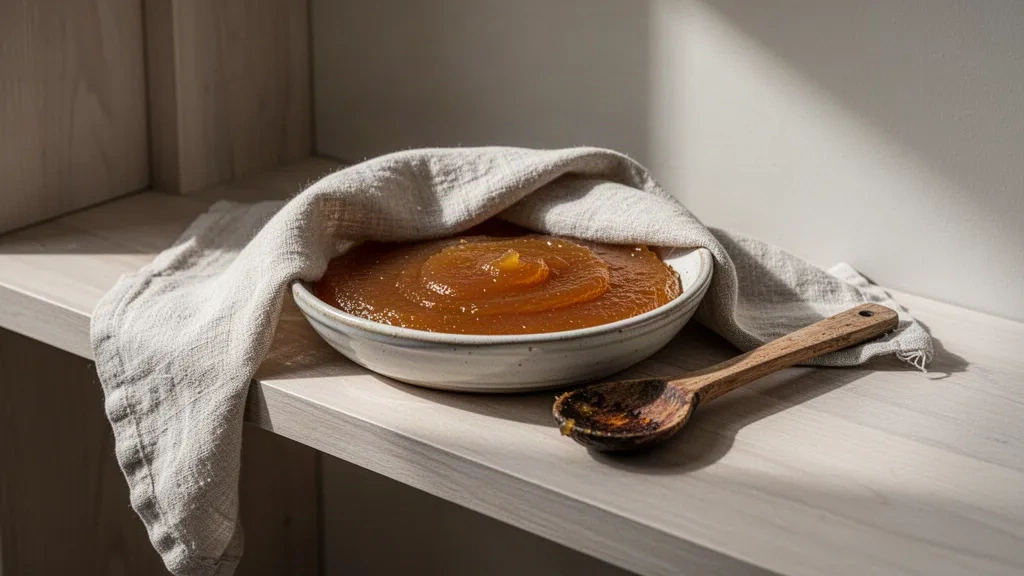
The paste is in a shallow dish on the shelf now, under a cloth, and it has to sit two or three days before I can cut it into squares and roll them in sugar. The fog lifted around four, all at once, the way it does, and the far end of the street came back exactly where I’d left it.
Recipe: Cotognata
Ingredients
- 2 kg quinces, washed
- sugar, about the same weight as the sieved pulp (roughly 1 kg)
- a squeeze of lemon juice
- extra caster sugar, for rolling
Preparation
- Peel, core, and roughly chop the quinces, keeping the seeds out. Put them in a heavy pan with a few tablespoons of water and cook gently, covered, until completely soft, 30–40 minutes.
- Push the pulp through a fine sieve or a food mill. Weigh it, then return it to the clean pan with an equal weight of sugar and the lemon juice.
- Cook over low heat, stirring almost constantly with a wooden spoon, for 40 minutes or more, until the mixture is thick, glossy, and pulls cleanly away from the sides of the pan. It should hold a line drawn through it.
- Spread about 2 cm thick in a shallow dish or on a tray lined with baking paper. Smooth the top and leave in a dry, airy place for 2–3 days until firm and sliceable.
- Cut into squares or diamonds, roll each in caster sugar, and keep in a tin between sheets of paper. It lasts for months.