
The Houses That Lean Together
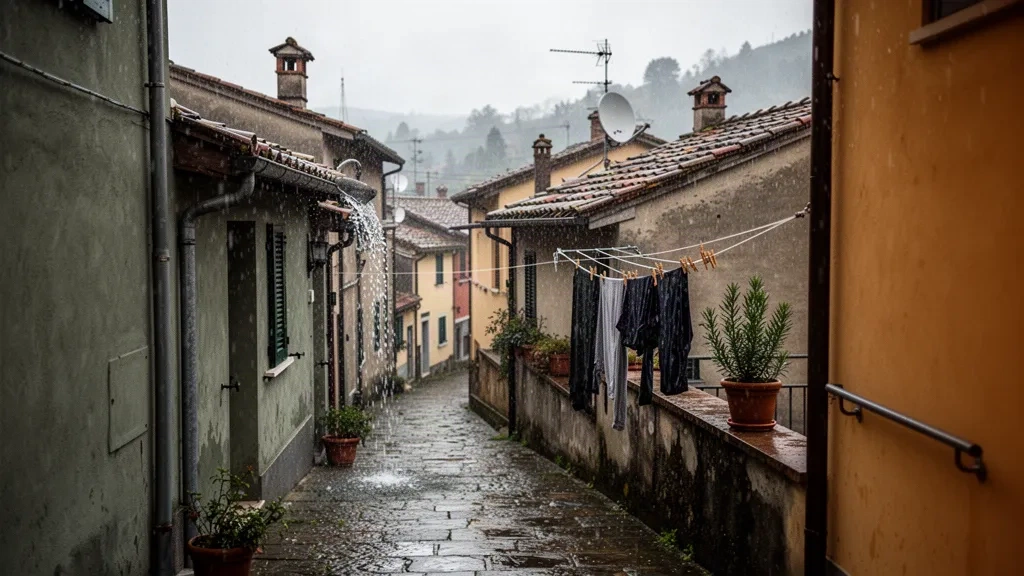
It rained all day, a steady grey rain with no drama in it, and I went out anyway because we were out of bread. Coming back up the lane I noticed something I’ve walked past a hundred times without ever seeing: how the houses along the ridge lean into one another. Shoulder to shoulder, sharing walls, one roof’s gutter emptying onto the next, so a drop of rain that lands on the first house eventually leaves by the last. They were built that way because the ridge is narrow and there’s nowhere to spread out, but the effect is a street that keeps its own company. A woman two doors up was pulling her washing off the line, pegs clicking, and we waved at each other through the rain like a pair of idiots, both grinning. Nobody with any sense hangs washing out in October, and yet there it was.
By the time I was dry, my neighbor had knocked with a paper bag of chestnuts from her brother’s tree, and we stood in the doorway with the rain behind her, talking about nothing for ten minutes. That set the shape of the afternoon. I’ve been turning over the question of what’s worth putting by before winter — the cupboard kind of question, not the philosophical one — and chestnut flour is my answer every year: it keeps, it costs almost nothing, and in February it’s the thing that turns a nothing evening into something. I had a bag of it going quietly stale at the back of the shelf, so I used it up.
Castagnaccio is the least fussy cake I know and the easiest to get wrong, which is a strange combination. The batter is thin enough to pour, closer to water than to cake, sweetened with barely anything — a spoon of sugar, sometimes none at all — and it goes into a wide oiled tin with rosemary, pine nuts, and a handful of raisins, and comes out flat and dark, cracked across the top, more like something from an old story than a dessert. It’s the flour of the mountains; the old people called the chestnut the “bread tree,” and you can taste the history in it — no gluten, no lift, just chestnut and oil and rosemary. Eaten warm with a spoonful of ricotta it’s better than it has any right to be. The rain is still going, the bag is empty, and there’s a tin of it on the counter. A good way to end a wet day.
Recipe: Castagnaccio
Ingredients
- 250 g chestnut flour
- 350–400 ml water
- 2 tablespoons olive oil, plus more for the tin
- 1–2 tablespoons sugar (optional)
- a pinch of salt
- 50 g raisins, soaked in warm water and drained
- 40 g pine nuts
- a sprig of rosemary, needles only
Preparation
- Sift the chestnut flour into a bowl and whisk in the water gradually until you have a thin, smooth batter the consistency of single cream. Stir in the sugar, salt, and olive oil. Let it rest 30 minutes.
- Heat the oven to 200°C (400°F). Oil a wide, shallow tin (about 30 cm) generously.
- Pour in the batter — it should be no more than 1 cm deep — and scatter the raisins, pine nuts, and rosemary over the top.
- Bake 25–30 minutes, until the top is cracked, the edges have pulled away from the tin and darkened. It should be crisp at the edge and soft in the middle, never dry.
- Serve warm or at room temperature, traditionally with fresh ricotta.