
The First Basket of Olives
The overcast sat low all morning, so I took the sloping street instead of the flat way, mostly because from up there the Savuto valley opens out below — terraces stepping down, the river line of trees, the far ridge gone into the cloud so you can’t tell where the hill ends and the sky starts. Same view I’ve had a hundred times, and I stopped anyway. What I noticed: the fig tree across the road is bare now. Last week it still had three stubborn leaves on the top branch and I’d been watching them. Now it’s sticks. Nothing else has changed, and I don’t know why that’s the thing I keep turning over.
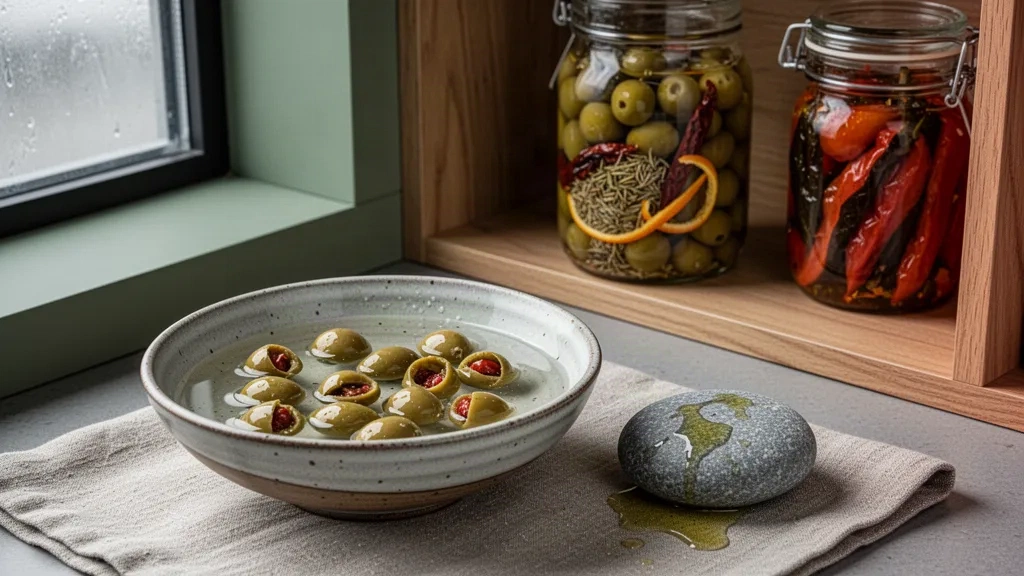
The afternoon went to olives. A neighbour’s brother has trees and sent more than the two households could ever eat, so a sack arrived at my door with the half-joking instruction that I’d know what to do with them. Green olives off the tree are bitter in a way you can’t cook out — the bitterness is in the fruit itself, and the only cure is patience and water. So I cracked each one with the flat of a stone, just enough to break the skin without crushing it, and they’re sitting in a bowl of cold water now, which I’ll change twice a day until the water stops tasting sharp.
Then they go into brine, and this is the one number worth knowing: ten per cent salt by weight — a hundred grams of coarse salt to every litre of water, stirred until it’s completely dissolved. Less and the wrong things grow; more and you’ve made something that keeps forever and tastes of the sea. Fennel seeds, a dried chili, a strip of orange peel in with them, and in a month they’ll be the good bitter kind you eat with bread and oil before anything else arrives. My fingers still smell of them.
The light is gone by six now, so the fig tree isn’t the only thing that changed this week. The jar is on the shelf beside the peppers, and I have to leave it alone for a month, which is the part I’m not good at.
Recipe: Olive in Salamoia
Ingredients
- 1 kg fresh green or turning olives
- 100 g coarse sea salt
- 1 litre water
- 1 teaspoon fennel seeds
- 1 dried chili
- a strip of orange peel (or lemon)
- 2 cloves garlic and a bay leaf (optional)
Preparation
- Discard any bruised or split olives. Crack each one lightly with a stone or the flat of a knife, or slit it lengthwise, so the water can reach the flesh.
- Put them in a bowl of cold water and soak 7–10 days, changing the water twice a day, until they taste pleasantly bitter rather than harsh.
- Make the brine: dissolve 100 g coarse salt in 1 litre of water (10 per cent). Stir in the fennel, chili, orange peel, and garlic or bay if using.
- Drain the olives, pack them into clean jars, and cover completely with the brine. Seal.
- Keep in a cool dark place at least a month before eating; they improve for several months. Refrigerate after opening. If the brine turns cloudy or the olives go soft, discard them.